Fashion Museum: Digitizing Sartorial History
A comprehensive digital archive design for a fashion museum, focusing on immersive storytelling and textile detail.
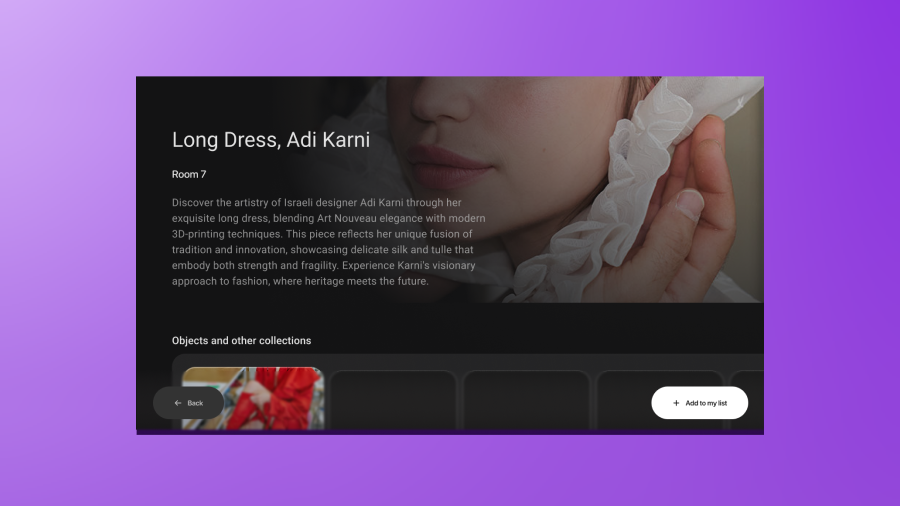
The Fashion Museum project involved creating a digital experience that mirrors the elegance and detail of a physical museum visit. The challenge: translating the tactile, immersive experience of a physical fashion archive to a digital medium — while achieving WCAG AAA accessibility compliance and making 200,000+ artifacts globally accessible.
We approached the collection not as a database to browse, but as a set of stories to discover — shaping every design decision from navigation architecture to copywriting tone.
Immersive Features
Bringing the tactile museum experience to the digital space.
Full-Screen Depth View
Custom deep-zoom allows inspection of textile weave patterns and beadwork at unprecedented detail.
Historical Timeline
Interactive links between fashion eras and global events, providing deep cultural context.
Curatorial Narratives
Ability for curators to compose thematic "exhibitions" with editorial commentary and photography.
Multilingual Metadata
Culturally nuanced translations in six languages for all artifact descriptions.
The Journey
A 20-week collaboration between curators, designers, and developers.
Archival Research
On-site immersion to understand cataloguing conventions and the museum's unique storytelling needs.
Audience Mapping
Defined personas across historians, students, and general visitors to balance depth and ease of use.
Information Architecture
Designed a comprehensive system for browsing, searching, and educators resources, validated via card sorting.
Visual Identity
Developed a restrained UI that recedes, allowing the collection to remain the focal point.
Prototype & Iterate
Built high-fidelity Figma prototypes and refined the zoom experience across 4 rounds of stakeholder review.
Accessibility Audit
Commissioned a WCAG AAA audit and addressed 23 findings including complex image descriptions.
Curatorial Insight
Beyond the Catalogue
"We approached the collection not as a database to browse, but as a set of stories to discover — making every garment a doorway into history."
Technical Elements
Layering advanced technology for cultural preservation.
IIIF Image Server
Integrates gigapixel-resolution scans for true garment inspection.
Restrained UI Language
Muted tones and generous margins ensure zero distraction from the artifacts.
Editorial Typography
High-contrast serif titles balance historical elegance with modern screen legibility.
Project Success
Measurable results in accessibility and user engagement.
Frequently Asked Questions
Challenges and solutions in cultural heritage digitization.